



.svg)
.svg)
.svg)
.svg)


.svg)

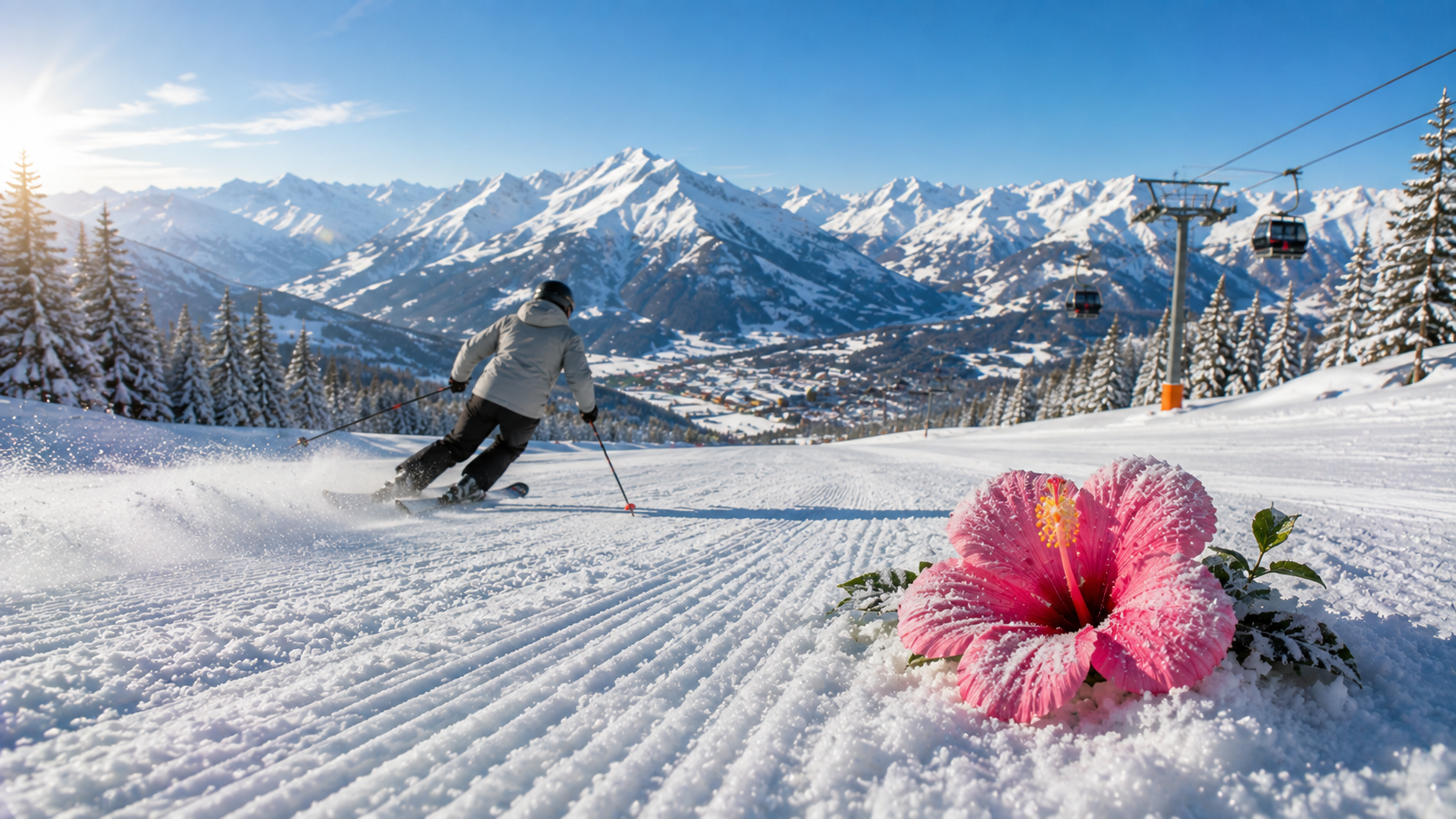
There is something about a ski holiday that makes it look almost too good to be true.
Waking up to snow covered mountains, stepping outside into crisp winter air and spending the day on the slopes before settling into a cosy restaurant as the sun disappears behind the peaks. Or perhaps your idea of a ski holiday is a little less peaceful, with daily visits to the après ski bars, several drinks and a lively nightlife scene waiting once the skis come off.
Either way, it is easy to see the appeal. A ski holiday can be a mix of incredible scenery, adventure, good food, plenty of fresh air and, depending on where you go, a pretty lively social scene too.
Then you start looking into actually booking one.
Suddenly there are lift passes, ski hire, ski schools, different coloured runs, transfers, goggles, helmets, après ski and something called a “ski in, ski out” hotel. It can feel like there is an entire language you are supposed to learn before you have even put a pair of skis on.
The good news is that you really do not need to know everything before you go. A first ski holiday is much easier when you break it down into a few simple decisions, and there is a particularly easy way to take a lot of the organising off your plate.

Start simple with a ski package
For a first ski holiday, we would not make life more complicated than it needs to be.
A package holiday can take care of many of the fiddly parts in one go. Crystal Ski, for example, currently includes flights, transfers and accommodation in its 2026/27 ski packages, with at least 20kg of luggage included on its package holidays. You can then add things like lift passes, equipment hire and ski school when you book.
That is particularly useful when you have never been skiing before. Instead of working out how to get from the airport to a mountain village, where to collect your skis and how to arrange lessons, a large part of the holiday can be organised before you even leave home.
For us, that is a sensible place to start. Your first ski holiday should be about learning to ski and enjoying the mountains, not learning how to organise a ski holiday.
Choose somewhere that makes learning easy
Your first trip does not need to be to the biggest or most famous resort you have heard of. In fact, we would probably avoid choosing a destination purely because everyone else has heard of it.
Look for somewhere with beginner slopes, good ski schools, straightforward access to the mountain and enough happening off the slopes that you still have things to enjoy when your legs have had enough.
Crystal currently has more than 150 resorts across 14 countries and lets you filter its holidays by “best for beginners”, which is a useful starting point when you are not sure where to look.
Accommodation can make a surprisingly big difference too. You will often see the phrase “ski in, ski out”, which essentially means you can get onto the slopes directly from or very close to where you are staying.
It might sound like a small luxury before your first trip, but after spending the day in stiff ski boots, carrying skis and poles through a snowy village for ten minutes is something you will be very happy to avoid.

Lessons are probably the best money you will spend
You can technically teach yourself to ski, but we would not recommend it.
A few lessons at the start of your trip can make an enormous difference. An instructor can show you how to stand, stop, turn and use the lifts properly, while also helping you understand the basics of the slopes and giving you confidence before you head further up the mountain.
And if you want to get ahead of the curve before you even reach the Alps, there are indoor ski centres around the UK where you can take lessons before your holiday. Getting a little time on skis beforehand means your first day on the mountain does not have to be your first ever attempt at staying upright, giving you a much better chance of hitting the ground running.
It is worth remembering that the better you become, the more you are likely to enjoy the rest of the holiday. Once you can comfortably control your skis, stop with confidence and link a few turns together, you can spend less time worrying about what your feet are doing and more time enjoying the mountain around you.
And do not worry about being the only adult who cannot ski. Ski schools teach complete beginners every season. There is no prize for pretending you know what you are doing and getting proper instruction early can save you from spending the first two days falling over while a more experienced friend tries to explain what your feet are supposed to be doing.
What else do you actually need?
Even with a package holiday, there are a few things worth understanding before you go.
- Lift pass: Essentially your ticket for using the mountain’s lifts and getting up to the ski runs. As a beginner, you may not need the biggest area pass available if you will spend most of your time on the easier slopes.
- Ski or snowboard hire: Usually includes your skis or snowboard, boots and poles. You can also add rent helmets for a small additional cost which we strongly recommend. Hiring is the simplest option for a first trip, particularly if you are not yet sure whether skiing is going to become a new obsession.
- Lessons: Budget for these from the beginning. They are one of the best ways to make your first few days more enjoyable.
- Winter sports insurance: Make sure your travel insurance actually covers skiing. Standard cover does not always include winter sports.
- Clothing: A warm waterproof ski jacket and trousers, thermal layers, ski gloves, goggles and proper ski socks are the basics. There is no need to buy a huge collection of specialist equipment before your first trip.
Crystal also lets travellers add equipment hire and lessons to bookings and its first time bundles can combine a lift pass, equipment hire and lessons where available.
The main thing is to check exactly what is included in your particular holiday before you book. Ski packages can take away a lot of the hassle, but you do not want to arrive at the resort assuming something is included when it is not.
Don't worry about the ski lingo
The terminology can sound intimidating at first, but most of it is fairly straightforward once you know what people mean.
A piste is simply a marked ski run. You will also hear people talking about green, blue, red and black runs. These broadly indicate increasing difficulty, although the exact grading can vary slightly between countries and resorts.
- Green: Usually the easiest terrain for beginners.
- Blue: Generally the next step once you are comfortable on the easiest slopes.
- Red: More challenging runs for skiers with more experience.
- Black: The most difficult marked runs.
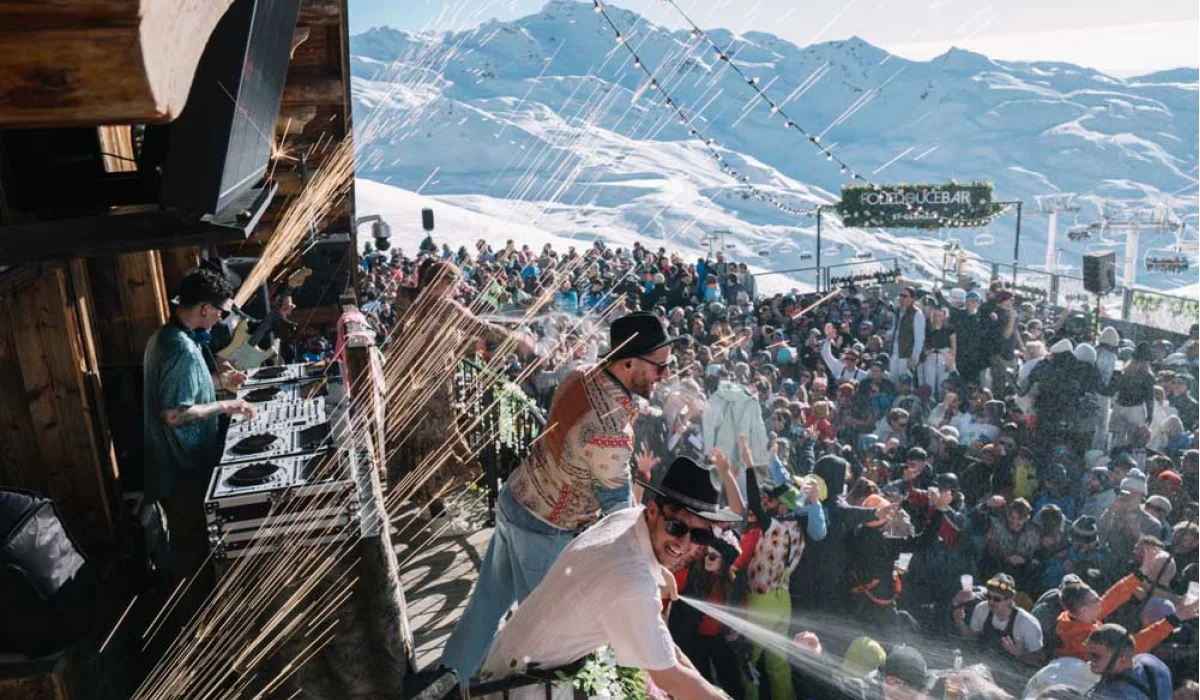
Then there is après ski, which is a huge part of the appeal for many people. It simply means the social side of the day once skiing is finished, but depending on the resort it can be anything from a relaxed drink and dinner to lively bars on the slopes or in the village, complete with DJs, live bands and even champagne sprays. For younger groups and anyone looking for a social scene, the après ski can be almost as much of a reason to choose a resort as the skiing itself.
A gondola or cable car is an enclosed lift that carries you higher up the mountain, while a chairlift is the open seated lift you will see travelling up the slope.
You will pick this stuff up surprisingly quickly. Give it a couple of days and you will probably find yourself talking about blue runs and lift passes as though you have been doing it for years.
Then comes the bit where it starts to make sense
Your first morning on skis might not be especially graceful.
The boots feel strange, the skis feel longer than you expected and getting onto a lift can seem like something best left to professionals. You will probably wobble, you might fall over and there is a good chance your first few turns will feel much less elegant than they looked in your head.
But that is also why the first successful run feels so good.
You make your first proper turn, manage to stop where you intended and eventually reach the bottom of a gentle slope without spending half of it on the snow. Suddenly, the things that seemed complicated when you were sitting at home researching your holiday start to click.
You are not an expert skier, and you do not need to be. You have simply got over the biggest hurdle, and now you can start enjoying the mountain rather than worrying about what your feet are doing.
[Image suggestion: A more intimate photograph of a beginner during a ski lesson or successfully skiing down an easy green run with an instructor nearby. It should feel achievable and reassuring rather than extreme or overly action focused.]
So, what should you expect from your first ski holiday?
Probably a mixture of excitement, tired legs, a few falls and at least one moment where you wonder why you ever thought this was a good idea.
But that first trip is really about getting over the unfamiliarity. Once you have worked out how to put your boots on, found your way around the lifts, learnt how to stop and made it down a few runs without falling over, Skiing starts to grip you with a strong feeling of freedom. You enjoy the peace of the mountains, the scenery, the adventure of exploring new runs, the excitement of the après and most of all being part of a global community that loves the slopes.
And that is probably why people get so hooked.
The first trip teaches you how to ski. The next one feels easier because you already know the ropes. You start looking for longer runs, better views, different resorts and perhaps a livelier après scene. Before long, the things that seemed intimidating the first time around become part of the fun and you understand why so many people return to the mountains year after year.
Keep an eye out for our latest ski escapes, but don't blame us if you get the bug ⛷️

.svg)

