



.svg)
.svg)
.svg)
.svg)


.svg)

There are few things more frustrating than paying for Wi Fi on a flight, only to spend the next few hours watching a loading circle go nowhere.
A message takes forever to send, a webpage refuses to load and streaming is usually out of the question. For years, that has simply been part of flying. Once you leave the ground, you leave behind the fast, reliable internet you are used to at home.
That could finally be changing.
Starlink is rapidly being rolled out across commercial aircraft, with more than 1,400 planes equipped during 2025 alone and more than 40 airlines now deploying or committing to the service. The reason it has attracted so much attention is simple: Starlink uses satellites in low Earth orbit, helping deliver a faster, lower latency connection than many of the systems airlines have traditionally relied on.
For travellers, the difference is less about how the satellites work and more about what you can actually do with them.
So what changes for passengers?
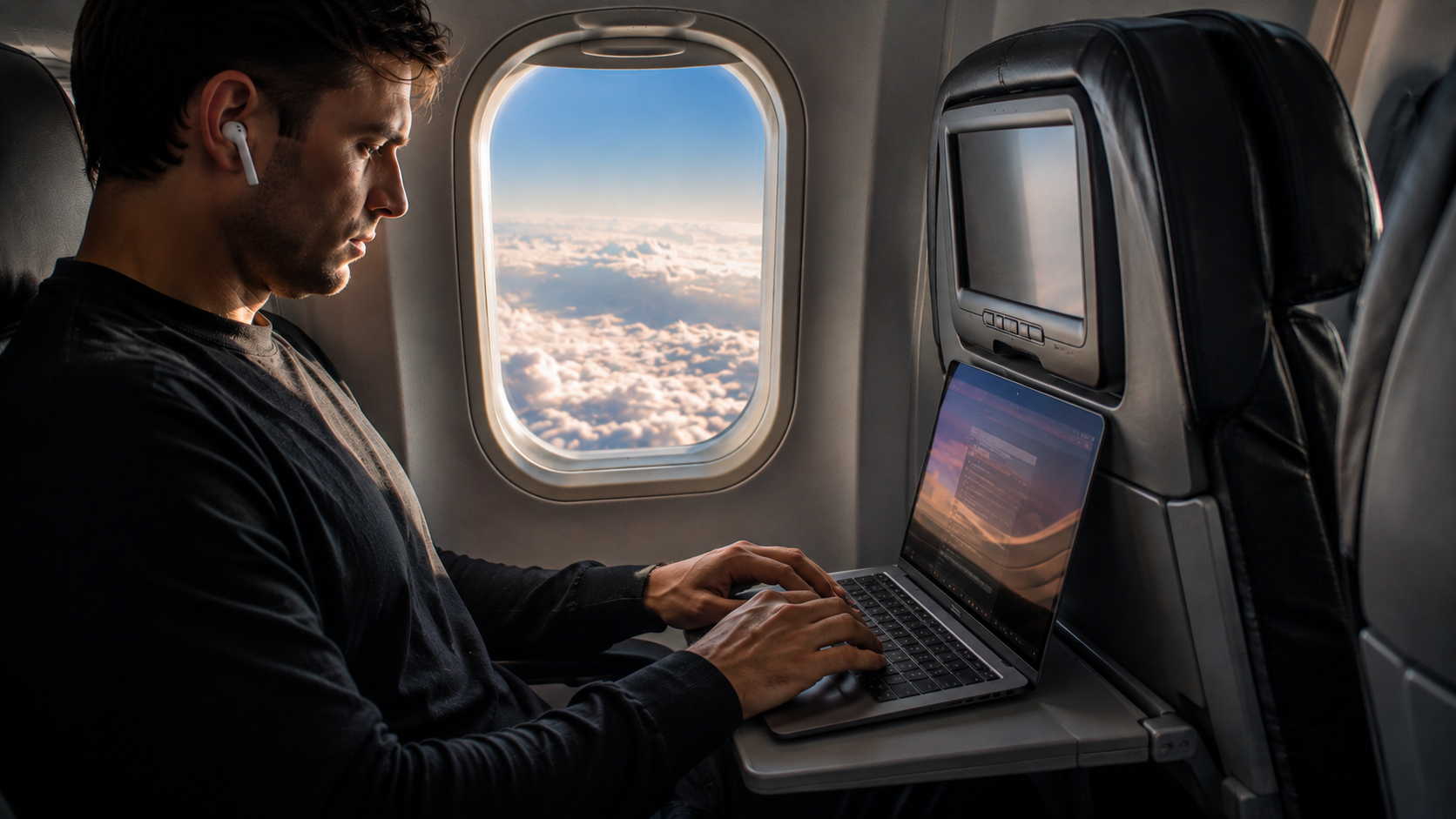
A good in flight connection means being able to use the internet much more like you would on the ground. Streaming a film, browsing normally, sending photos, keeping up with messages or catching up on work become realistic options rather than things you attempt at your own risk.
Virgin Atlantic says its Starlink service can support streaming, gaming, browsing and messaging, while the airline is also promoting the ability to follow live sport and use multiple devices during a flight.
That could make the biggest difference on long haul flights. Instead of downloading everything before departure and hoping you will not need the internet once you are airborne, passengers can potentially stay properly connected for much of the journey.
The rollout is already underway
This is not some distant upgrade that travellers might see in a few years. Airlines are already putting Starlink into service.
British Airways began offering Starlink on selected long haul flights in March 2026, starting with its Boeing 787-8 aircraft. The airline says the service is fast, free and available across all cabins, with short haul aircraft due to follow in 2027.
Virgin Atlantic has also started its rollout, beginning with its A350 fleet in May 2026. The airline plans to extend Starlink across its Boeing 787 and Airbus A330neo aircraft, with full fleet coverage expected in 2027. For Flying Club members, the service is free.
They are far from alone. United, Qatar Airways, Emirates, Air France, Alaska Airlines, WestJet and SAS are among the other airlines already using or rolling out Starlink, while several more carriers have announced plans to introduce it.
That is perhaps the most interesting part of the story. Airline Wi Fi is no longer just becoming faster; passengers are increasingly being given a reason to expect it to be included with the flight.
What about your next flight?
The rollout will take time, and having a Starlink agreement does not mean every aircraft in an airline's fleet is equipped yet. The aircraft operating your particular flight still matters, so travellers should check the airline's latest information rather than assuming every service will have it.
But the direction of travel is clear. After years of accepting that internet in the sky would always be a watered down version of what we have on the ground, airlines are finally starting to change that.
For travellers, that could mean a long haul flight where staying connected is no longer something you put up with, but something you barely have to think about.
And honestly, about time.

.svg)

